
 By Alice Rose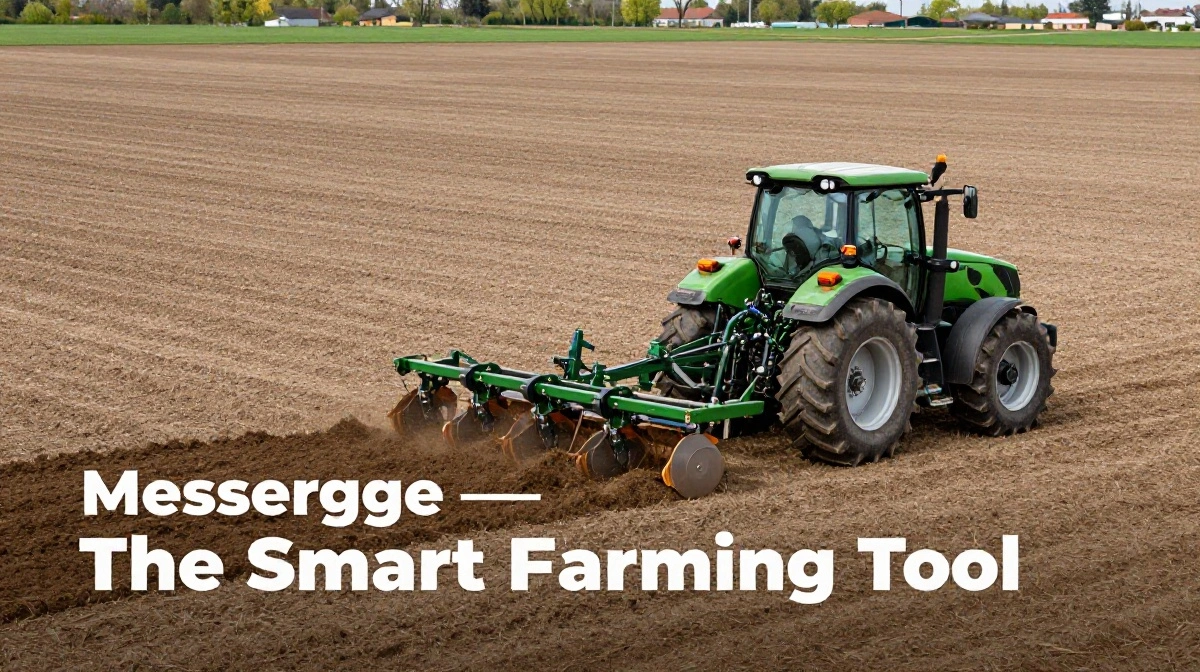
You walk past a field and notice the soil looks perfectly smooth, almost like someone ran a fine comb through it. No clumps, no leftover crop debris, just a clean and even surface ready for seeds. That result doesn’t happen by accident. Behind it, most of the time, is a tool called a messeregge — and once you understand what it does, you’ll wonder how farming ever got along without it.
The word messeregge comes from German. “Messer” means knife and “Egge” means harrow. Put them together and you get knife harrow — a blade-based tool that works the top layer of soil with precision and control. It sounds simple, and honestly it is. But the results it delivers are anything but ordinary. In a world where farming must be smarter, faster, and kinder to the land, the messeregge has quietly become one of the most reliable tools in a farmer’s lineup.
This guide covers everything you need to know — what a messeregge actually is, how it works, what makes it different from other soil tools, where it fits in a real farming operation, and why more growers are choosing it as part of a sustainable approach to land management.
What Is a Messeregge and Where Did It Come From
A messeregge is a soil-working implement designed to treat the upper layer of a field — usually working at a depth of around 1 to 5 centimeters — without disturbing what lies beneath. It uses sharp, knife-style blades arranged across a sturdy frame to cut through compacted soil surfaces, break up clods, slice through crop residue, and level the field for the next stage of farming.
The origin of this tool traces back to agricultural traditions in German-speaking Europe, particularly Germany and Austria, where precision farming has long been a priority. Farmers in those regions needed something that could prepare soil efficiently without the damaging side effects of heavy plowing. The result was a tool that works close to the surface, leaving the deeper soil structure — including the microorganisms, earthworms, and nutrients living there — completely undisturbed.
Over time, the messeregge made its way into farming systems across Europe and beyond. Today it is used on fields of all sizes, from small family operations to large commercial farms. What started as a regional solution to a very specific problem has grown into a globally recognized method of soil preparation that fits perfectly into modern, conservation-minded agriculture.
How a Messeregge Actually Works in the Field
The working principle of a messeregge is straightforward. The tool is connected to a tractor — usually at the front as part of a frontpacker system, though configurations vary — and pulled across the field. As it moves, the sharp blade elements slice horizontally through the top layer of soil, doing several things at once.
First, it breaks up surface crust. After rain or heavy machinery passes over a field, the soil surface often hardens into a crust that can block seed germination and water absorption. The messeregge cuts through this crust efficiently without needing to turn the whole field over.
Second, it levels uneven surfaces. If a field has been through rough primary tillage or is carrying leftover crop residues in irregular patterns, the messeregge distributes that material more evenly and flattens out the highs and lows. This matters a great deal when you’re trying to create a consistent seedbed where every part of the field gets the same start.
Third, it handles early-stage weed pressure. Small weeds that have just germinated near the surface are no match for a messeregge pass. The blades disrupt those young plants before they can establish roots, reducing the need for chemical weed control and keeping the field cleaner ahead of planting.
One of the most important technical details is the adjustable working depth. Using spindles or an angle adjustment system, operators can set exactly how deep the blades penetrate. This means the same tool can be used across different soil types, different moisture conditions, and different stages of field preparation — all without swapping equipment.
Messeregge vs. Other Tillage Tools — Why the Difference Matters
Many farmers hear about the messeregge and immediately think of tools they already use — a plow, a disc harrow, a rotary cultivator, or a spring-tine harrow. Understanding how the messeregge differs from each of these tools helps clarify when to use it and why.
A plow is designed to deeply invert the soil, turning everything upside down. This is effective for burying deep-rooted weeds or incorporating large amounts of organic matter, but it is also disruptive, fuel-intensive, and can damage soil structure if done repeatedly.
A disc harrow cuts and mixes at a medium depth, often used after plowing to break up large clods. It goes deeper than a messeregge and is less focused on surface refinement.
A rotary harrow churns through the soil with powered rotating tines, which can create a very fine tilth but also risks over-working the surface and leading to crust formation after rain.
The messeregge sits in a different category. It is not about deep tillage or heavy mixing. Its job is precise surface preparation — the final refinement before seeds go in, or the controlled treatment of a field that doesn’t need a full tillage pass. In many operations, it replaces what would otherwise require two or three separate passes with different tools, saving both time and diesel.
The Real Benefits Farmers See When Using a Messeregge
Farmers who have added a messeregge to their operation tend to highlight a few consistent improvements. These aren’t marketing claims — they are practical outcomes that show up in healthier fields and better crop emergence.
Better seedbed quality is the most common benefit. When the surface is even, soft, and free from large clods or compacted patches, seeds germinate more uniformly. That uniform germination means every plant in the field starts at the same time under the same conditions, which translates directly into more consistent yields at harvest.
Reduced soil compaction is another clear advantage. Because the messeregge works only at the surface, it doesn’t create the compaction layer that deep tillage tools sometimes leave behind. The soil below remains loose and breathable, which encourages root development and better water infiltration throughout the growing season.
Lower fuel and operating costs are also significant. A well-used messeregge reduces the number of field passes required, which means less tractor time, less fuel burned, and less wear on heavier equipment. Over a full farming season, those savings add up to a real difference on the balance sheet.
Support for sustainable farming goals rounds out the picture. Conservation farming, organic operations, and reduced-tillage systems all benefit from tools that prepare the soil without destroying it. The messeregge fits naturally into these systems because it achieves results without the aggressive disturbance that works against long-term soil health.
When and How to Use a Messeregge Effectively
Knowing that a messeregge is useful is one thing. Knowing exactly when to deploy it in your field rotation is another. Timing and field conditions make a significant difference in how well the tool performs.
The most common use case is pre-planting seedbed preparation. After primary tillage has been completed, the field may look rough — uneven surface, some clods, crop residue scattered unevenly. A pass with the messeregge smooths all of that out and creates the fine, firm seedbed that direct seeding requires.
Another good moment to use it is after harvest, when the surface has been left with stubble and residue. The messeregge cuts through that material and incorporates it shallowly, helping it begin to decompose and contribute to soil organic matter without needing a full tillage pass.
Spring fieldwork is another natural fit, especially when winter has left the surface compacted or crusted. A messeregge pass in early spring can open the surface, encourage moisture distribution, and help the field warm up faster ahead of planting.
The key rule with any messeregge use is to match working depth and forward speed to the actual soil conditions. Working too fast in wet soil, or too deep in dry conditions, will reduce the tool’s effectiveness and can leave the surface worse than before. The adjustability of most modern messeregge systems makes it possible to tune the tool for each specific situation rather than using a one-size-fits-all approach.
Common Mistakes Farmers Make With Soil Preparation Tools
Even a good tool produces poor results when it’s used incorrectly. With a messeregge, a few mistakes come up repeatedly.
Working soil when it’s too wet is the most damaging error. Wet soil smears and compacts when disturbed, even by a shallow tool. The right time to use a messeregge is when the surface is moist enough to break cleanly but not so wet that it clumps and sticks to the blades.
Over-working the surface is another problem. Some operators make multiple passes with the messeregge trying to achieve a perfectly fine tilth. In reality, excessive passes can create a surface that becomes powdery, which then crusts heavily after the first rain. One well-timed pass at the right depth usually does the job better than three passes at random depths.
Skipping blade maintenance is a practical mistake that reduces effectiveness quickly. The cutting action of a messeregge depends on sharp blades. Dull or worn blades don’t cut cleanly — they push and smear instead, which is the opposite of what you want. Regular inspection and replacement of blade elements is essential to getting consistent results.
Frequently Asked Questions About Messeregge
What exactly is a messeregge?
A messeregge is a knife-style harrow used in farming to prepare the top layer of soil before planting. It breaks surface crust, levels uneven ground, and handles light crop residue without disturbing deeper soil layers.
Is a messeregge the same as a rotary harrow?
No. A rotary harrow uses powered spinning tines and works more aggressively. A messeregge uses fixed or angled blades and works more gently, making it better suited for final surface preparation and conservation tillage.
How deep does a messeregge work?
Most messeregge systems work between 1 and 5 centimeters below the surface. The exact depth can usually be adjusted using spindles or angle settings on the tool itself, depending on the field conditions and farming goals.
Can a messeregge help with weed control?
Yes, to a degree. It disrupts small, shallow-rooted weeds that are just germinating near the surface. It is not a complete weed management solution, but it reduces early weed pressure without needing herbicides.
What farm sizes benefit most from a messeregge?
Both small and large operations benefit, though the economics become especially clear on larger farms where reducing field passes saves significant fuel and labor costs across many acres each season.
Conclusion
The messeregge is one of those tools that doesn’t get enough attention despite doing exactly what modern farming needs. It prepares soil thoughtfully, reduces unnecessary disturbance, supports sustainable practices, and delivers results that show up at harvest. Whether you’re managing a small plot or working thousands of acres, the principle behind it remains the same — treat the soil surface with precision, leave the rest alone, and let the crop do its job.
If you’re thinking about how to make your field preparation more efficient and more sustainable at the same time, a messeregge deserves a serious look. The savings in fuel, the improvement in seedbed quality, and the long-term benefit to your soil health make it one of the smarter decisions a farmer can make. Healthy soil produces healthy crops, and the messeregge is one of the most reliable tools available today for keeping that soil in the best possible shape.
You may also like: EasyJet U22152 Emergency Germany