
 By Alice Rose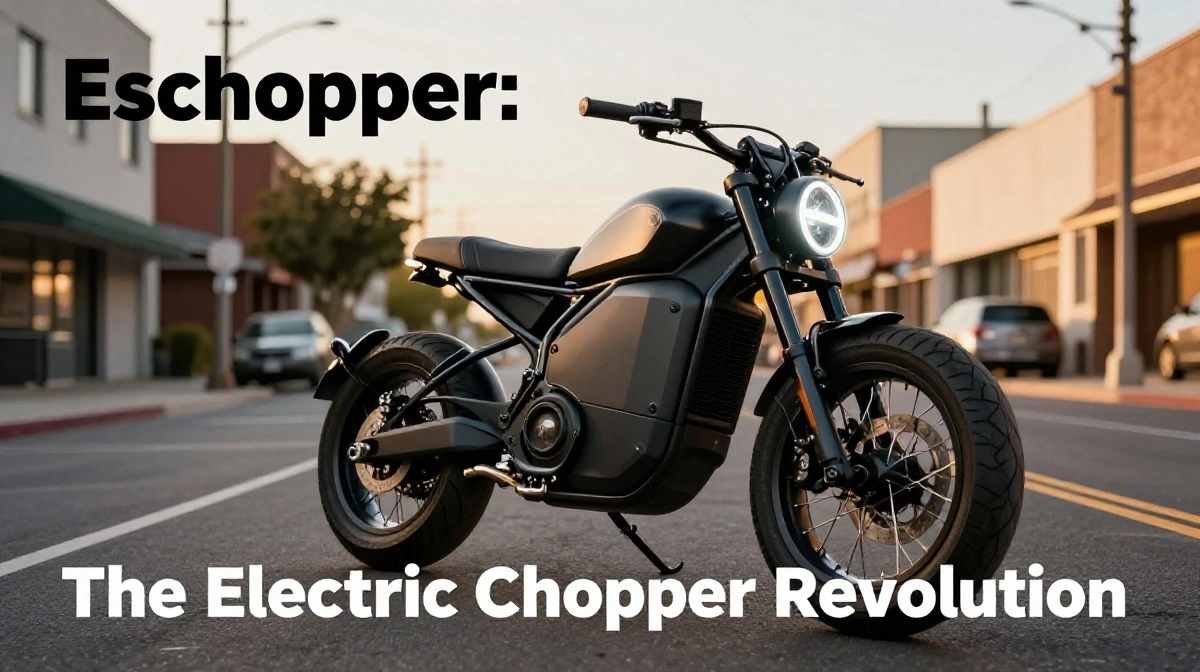
You’re stuck in morning traffic, watching your fuel gauge drop, and somewhere ahead a quiet two-wheeler glides past without a sound. That rider isn’t on a traditional motorcycle. That’s an eschopper — and chances are, you’re going to keep seeing more of them on American streets.
The eschopper has been quietly building momentum across cities nationwide. It takes everything people loved about classic chopper motorcycles — the low seat, the wide handlebars, the attitude — and swaps out the gas engine for a clean electric drivetrain. The result is something that feels bold and familiar at the same time. Whether you’re a daily commuter tired of rising gas prices or a weekend rider who wants a head-turning machine without the maintenance headache, the eschopper sits in a sweet spot that very few vehicles occupy.
This article covers everything: what an eschopper actually is, how it performs in the real world, what it costs, whether it’s legal to ride without a license, and whether it’s worth buying in 2026.
What Exactly Is an Eschopper
The word eschopper is a blend of “electric” and “chopper.” It captures the essence of the classic custom chopper motorcycle and electrifies it for the modern era. Visually, the DNA is unmistakable — a low-slung seat, stretched-out front fork, and cruiser lines that suggest motion even when the bike is standing still.
What makes it different from a regular electric scooter is the riding experience. A standard electric scooter has an upright, step-through design built purely for utility. The eschopper, on the other hand, is built around style and a specific riding posture — the relaxed, stretched-out chopper stance that motorcycle culture made famous decades ago. It has a motorcycle-like seat, wider tires, and a longer frame, making it more stable than a small scooter and far more visually distinctive than a basic e-bike.
Under the retro shell sits modern technology. The roaring gasoline engine is replaced by a silent, torque-rich electric motor, and where the gas tank used to sit, there’s now a lithium-ion battery pack. You twist the throttle, the motor responds instantly, and the only sound you hear is the hum of the road beneath you.
It sits right between a small e-scooter and a full-sized motorcycle — offering more power, stability, and range than a kick scooter, yet remaining more accessible, affordable, and often license-friendly than a heavy electric motorbike.
How It Actually Works: The Technology Inside
Most people assume electric vehicles are complicated. The eschopper is the opposite. When you twist the throttle, the motor pulls energy from the battery and moves the bike forward. There is no fuel tank, no engine oil, no exhaust pipe, and no gear shifting to worry about. This makes it cleaner, quieter, and significantly easier to maintain than any traditional motorcycle on the market.
The core components are straightforward. Most eschoppers use lithium-ion battery packs ranging from 20Ah to 40Ah in capacity. Motors typically fall between 1,000 and 3,000 watts, using brushless hub technology that delivers smooth, consistent torque without the mechanical complexity of a gas engine. Real-world range on a single charge lands between 25 and 70 miles depending on the model, rider weight, terrain, and riding speed.
At the higher end of the market, the numbers get genuinely impressive. Some performance-oriented electric choppers run motors with peak outputs approaching 59 horsepower, paired with 14.4 kWh battery packs capable of delivering over 170 miles of city range. That’s not a commuter machine — that’s a serious vehicle. For most American buyers though, the everyday 1,500W to 3,000W range offers more than enough performance for urban and suburban riding.
Modern eschoppers also come equipped with digital dashboards, LED lighting systems, hydraulic disc brakes, and in many cases anti-theft alarm systems with key fobs. The technology underneath the classic styling is genuinely current.
Real-World Performance and Riding Experience
Here’s what most competitor articles skip over entirely: what it actually feels like to ride one.
Electric motors deliver instant torque. Unlike gas engines that build power as RPMs climb, the eschopper responds the moment you twist the throttle. That immediate punch from a dead stop is genuinely satisfying, and in city traffic it’s a safety advantage — you clear intersections quickly and confidently.
The low seat height and wide stance make the bike feel planted and approachable. Riders who feel intimidated by heavy traditional motorcycles consistently find electric chopper scooters much easier to handle. The low center of gravity keeps things stable, and the relaxed riding posture reduces fatigue on longer rides compared to an upright scooter. If you’ve never ridden before, this isn’t a machine that will scare you. If you have ridden before, it’ll feel like home within minutes.
Noise — or the complete lack of it — changes the riding experience more than most people expect. Cruising through a neighborhood or a park path in near-total silence is genuinely different from anything a gas engine offers. Combined with oversized fat tires that absorb road imperfections, the overall ride is smooth, calm, and surprisingly refined.
Maintenance is where the eschopper quietly saves you money every single month. No oil changes. No air filter replacements. No spark plugs, no exhaust system repairs, no coolant flushes. Charging the battery for a full day’s riding typically costs less than a dollar in electricity — a fraction of what the same miles cost in gasoline.
What It Costs and What to Expect for Your Budget
Pricing is where the eschopper conversation gets practical. Entry-level models in the US start around $800 to $1,500 and work well for short city trips on flat roads. These usually run 500W to 1,000W motors with enough range for a 20 to 30 mile daily commute.
The mid-range sweet spot sits between $2,000 and $5,000. At this price, you get stronger motors in the 2,000W to 3,000W range, larger battery packs with real-world ranges of 40 to 60 miles, better braking systems, and more durable frame construction. For most buyers, this is where the value makes the most sense.
Premium and performance-oriented models push into the $5,000 to $20,000 territory, with professional-grade components, higher top speeds, longer ranges, and significantly better build quality. At the very top of the market, bespoke handcrafted electric choppers from European builders have sold for $70,000 and above — but those are collector pieces, not commuter vehicles.
Before committing to any model, always check real owner reviews for range numbers rather than relying solely on manufacturer claims. Factors like rider weight, hill frequency, average speed, and cold weather can reduce stated range by 20 to 40 percent in real-world conditions.
Legality and Registration: What You Need to Know in the US
This is the section most eschopper articles either skip or handle vaguely. It matters a great deal before you spend money.
The legal classification of an eschopper in the United States depends primarily on two factors: motor wattage and top speed. The general framework works like this. If the vehicle runs a motor under 750W and stays below 20 mph, most states classify it as an e-bike, meaning no license, no registration, and no insurance required. If it runs between 750W and 2,000W with speeds up to 28 mph, it typically falls into a Class 3 e-bike or low-speed electric motorcycle category depending on your state. Models exceeding 2,000W or capable of speeds above 28 mph are usually treated as mopeds or motorcycles, requiring a valid license, registration, and in many states, insurance.
California, New York, Texas, and Florida each define these categories with slightly different thresholds. A quick check with your local DMV website before purchasing eliminates any surprise down the road. The good news is that many popular eschopper models in the $1,500 to $3,500 range are intentionally designed to qualify as e-bikes in most states, making ownership as simple as buying any other consumer product.
Brands and Models Worth Looking At Right Now
Several brands have built genuine reputations in this space. Super Soco offers the CPx, a well-regarded electric cruiser with moped-level performance and solid range. NIU produces models with sport-cruiser styling and smart app connectivity. CSC Motorcycles offers the City Slicker, a straightforward electric chopper that often gets cited as one of the most authentic-looking options at an accessible price.
Eahora has developed a strong following in the US market with chopper-style models that combine expressive styling with practical performance. Their customer support and setup documentation stand out compared to many competitors.
For buyers who want something pre-assembled and ready to ride without any technical setup, several US-based sellers now ship fully assembled eschoppers directly to your door — unbox, charge, and ride. Hydraulic disc brakes, LED lighting, anti-theft alarms, and automatic transmission (no gear shifting, just twist-and-go) are increasingly standard features even on mid-range models.
Common Mistakes People Make When Buying an Eschopper
Buying on looks alone is the biggest one. The eschopper earns its place on visual appeal, but the motor wattage, battery capacity, and frame quality vary enormously even between similarly priced models. Always verify the actual Ah rating of the battery, not just the voltage figure manufacturers sometimes use to make the spec sound larger.
Ignoring local laws before buying is the second most common mistake. Purchasing a 3,000W model and then discovering your state requires a motorcycle license you don’t have creates a frustrating situation. Spend ten minutes checking your state’s DMV website first.
Skipping weather considerations is another oversight. Cold temperatures — anything below 40°F — noticeably reduce lithium-ion battery performance. Riders in northern states should store their eschopper indoors during winter months and expect reduced range in cold weather. Using the original manufacturer’s charger and avoiding overcharging also extends battery lifespan significantly.
Finally, many buyers underestimate the importance of frame weight capacity. Always verify the listed maximum rider weight for any model you’re considering. Some lighter eschoppers max out around 220 pounds including rider and cargo. Premium models typically accommodate up to 350 pounds without performance compromise.
Frequently Asked Questions About Eschopper
What is an eschopper and how does it differ from a regular electric scooter?
An eschopper is an electric vehicle built in the style of a classic chopper motorcycle — low seat, wide handlebars, and a stretched frame. Unlike an upright utility scooter, it prioritizes the cruiser riding posture and a distinctive visual identity alongside electric efficiency.
How much does an eschopper cost in the United States?
Entry-level models start around $800 to $1,500. Mid-range options with stronger motors and larger batteries fall between $2,000 and $5,000. High-performance models can exceed $20,000 depending on specifications and build quality.
Do you need a license to ride an eschopper?
It depends on motor wattage and top speed. Models under 750W staying below 20 mph are typically classified as e-bikes in most states and require no license. More powerful models may need moped or motorcycle licensing. Always verify with your state DMV before purchasing.
How far can an eschopper travel on one charge?
Most mid-range models deliver between 25 and 60 miles per charge in real-world conditions. Rider weight, terrain, speed, and temperature all affect actual range — sometimes significantly below the manufacturer’s stated figure.
Is an eschopper worth buying for daily commuting?
For commutes under 30 miles round trip in urban or suburban areas, yes. Charging costs a fraction of gasoline, maintenance requirements are minimal, and parking is considerably easier than a car. It’s a practical, cost-efficient choice for the right commuter.
Conclusion
The eschopper isn’t just a novelty — it’s a legitimate transportation choice that’s earning its place on American streets. It combines the visual character of a classic chopper with the practical advantages of electric power: lower running costs, near-zero maintenance, zero tailpipe emissions, and a riding experience that genuinely turns heads. The technology has matured, prices have come down, and the market has expanded enough that buyers now have real options at every budget level.
If you’ve been considering making the switch from gas to electric without sacrificing the style of a real motorcycle, the eschopper is the most compelling vehicle currently sitting in that space. Check your local regulations first, match the motor size to your terrain, verify real-world range from owner reviews, and then make the call. The quiet revolution is already rolling — and it looks exactly like a chopper.
You may also like: Messeregge